


-
£4,850.00
inc VAT
Model: GEESESTA

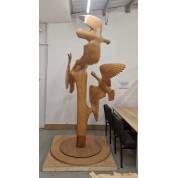
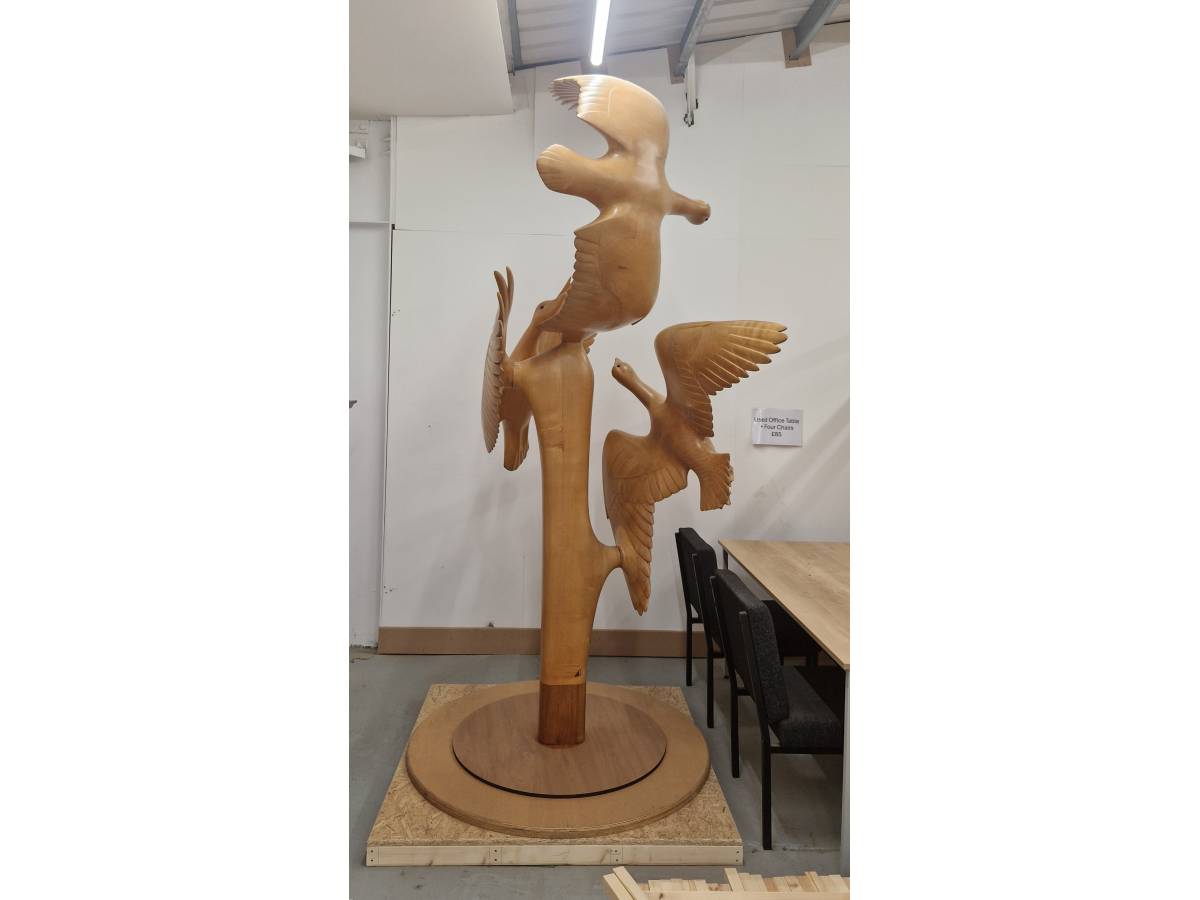
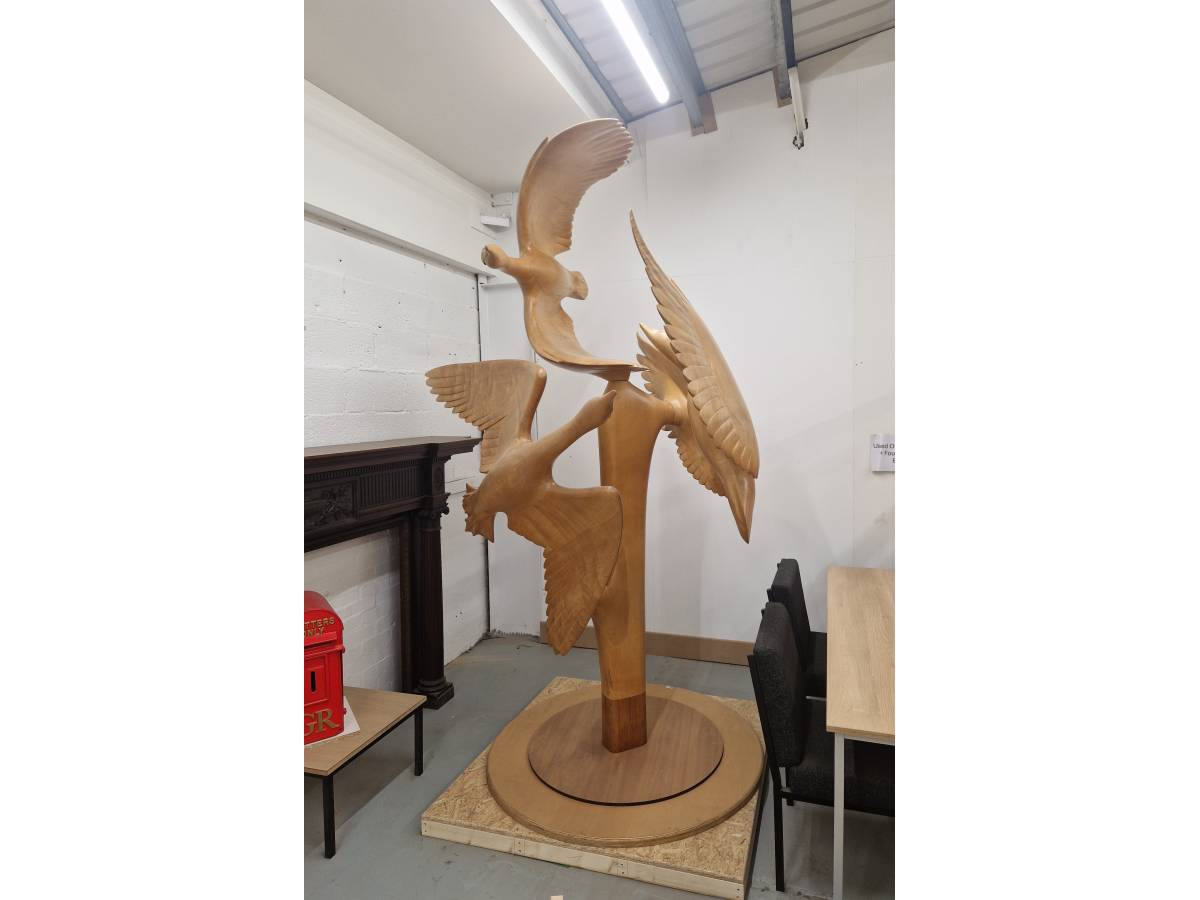
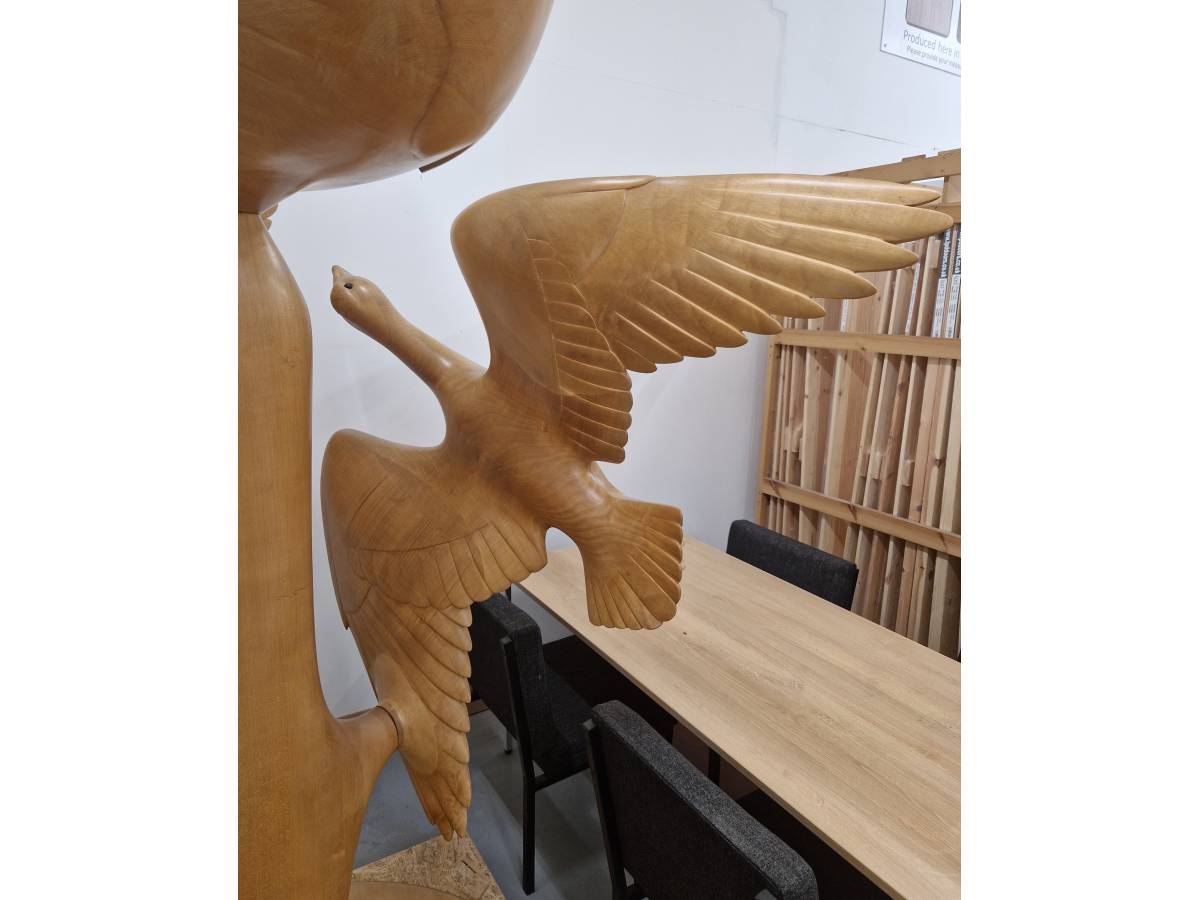
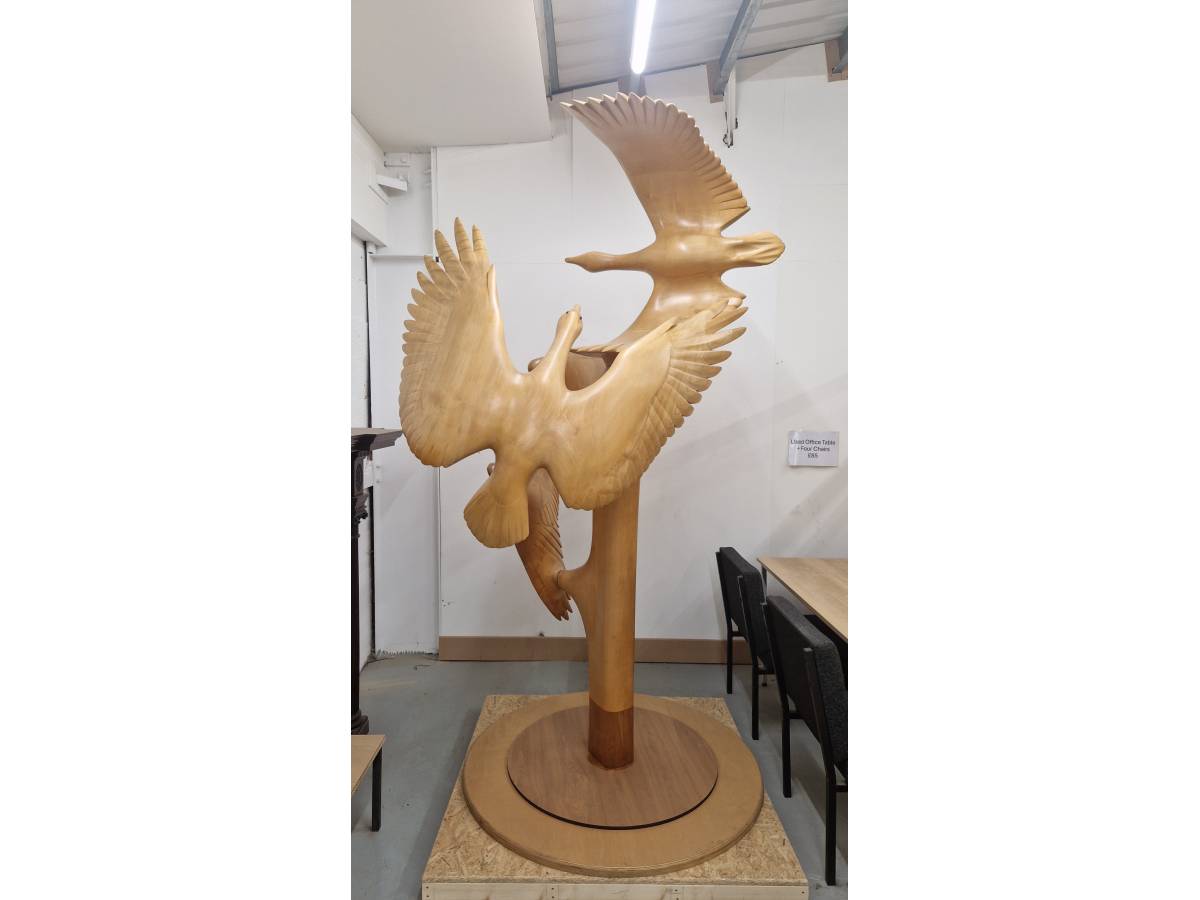
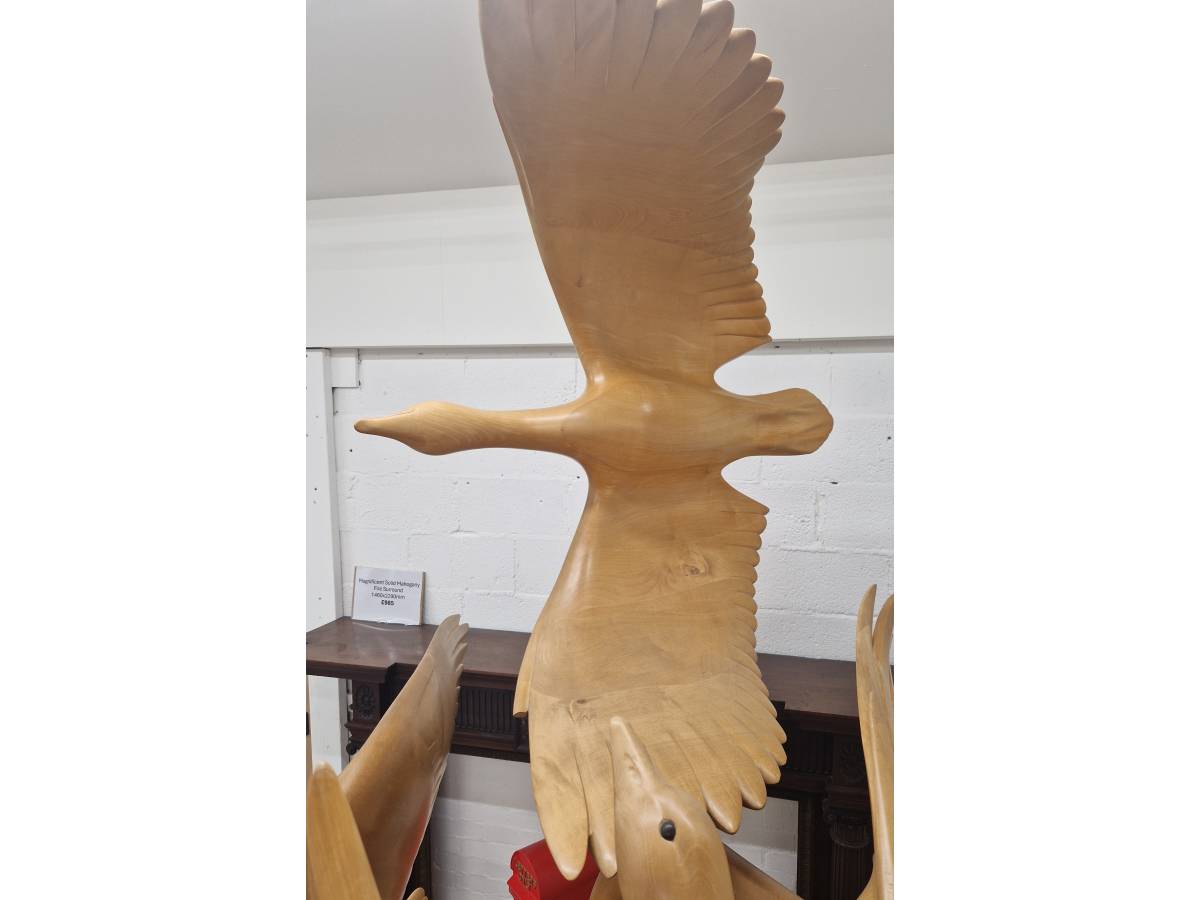
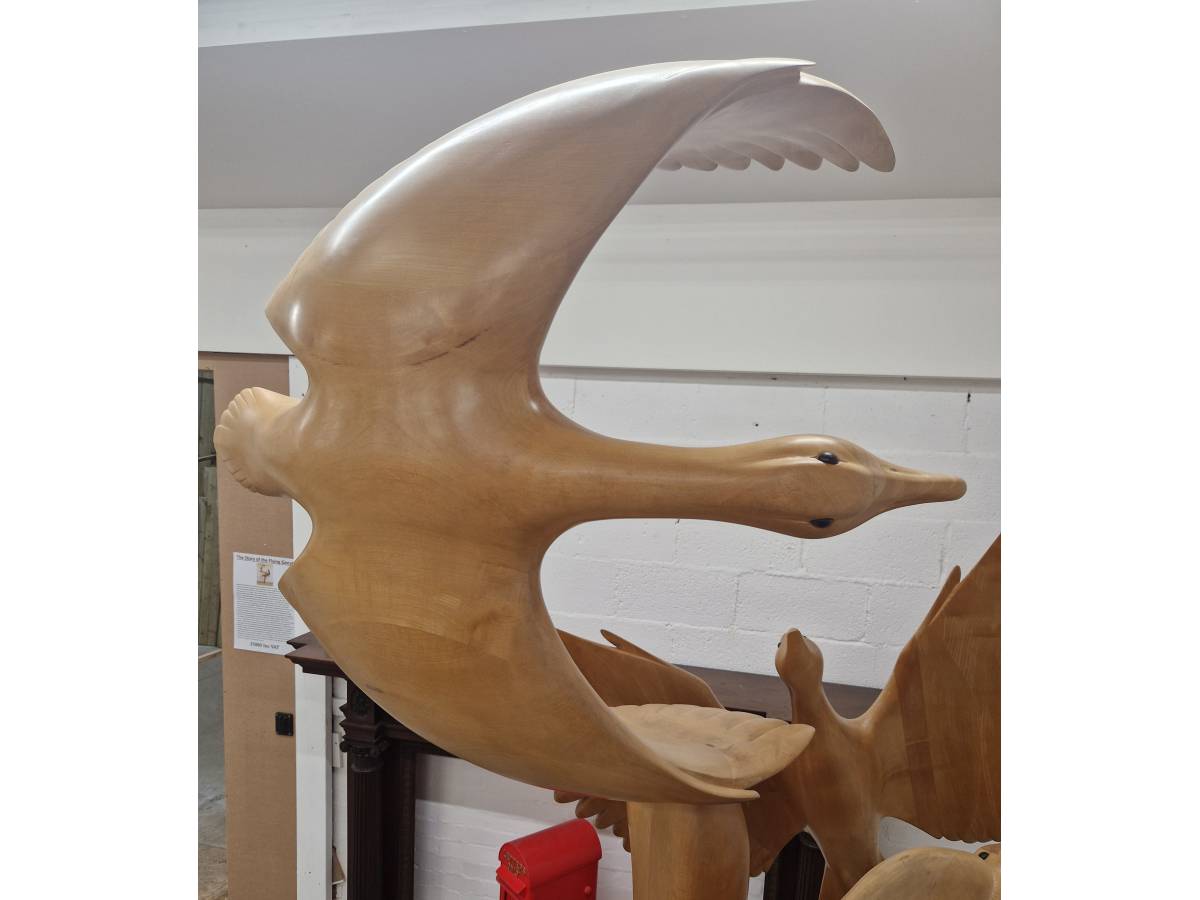
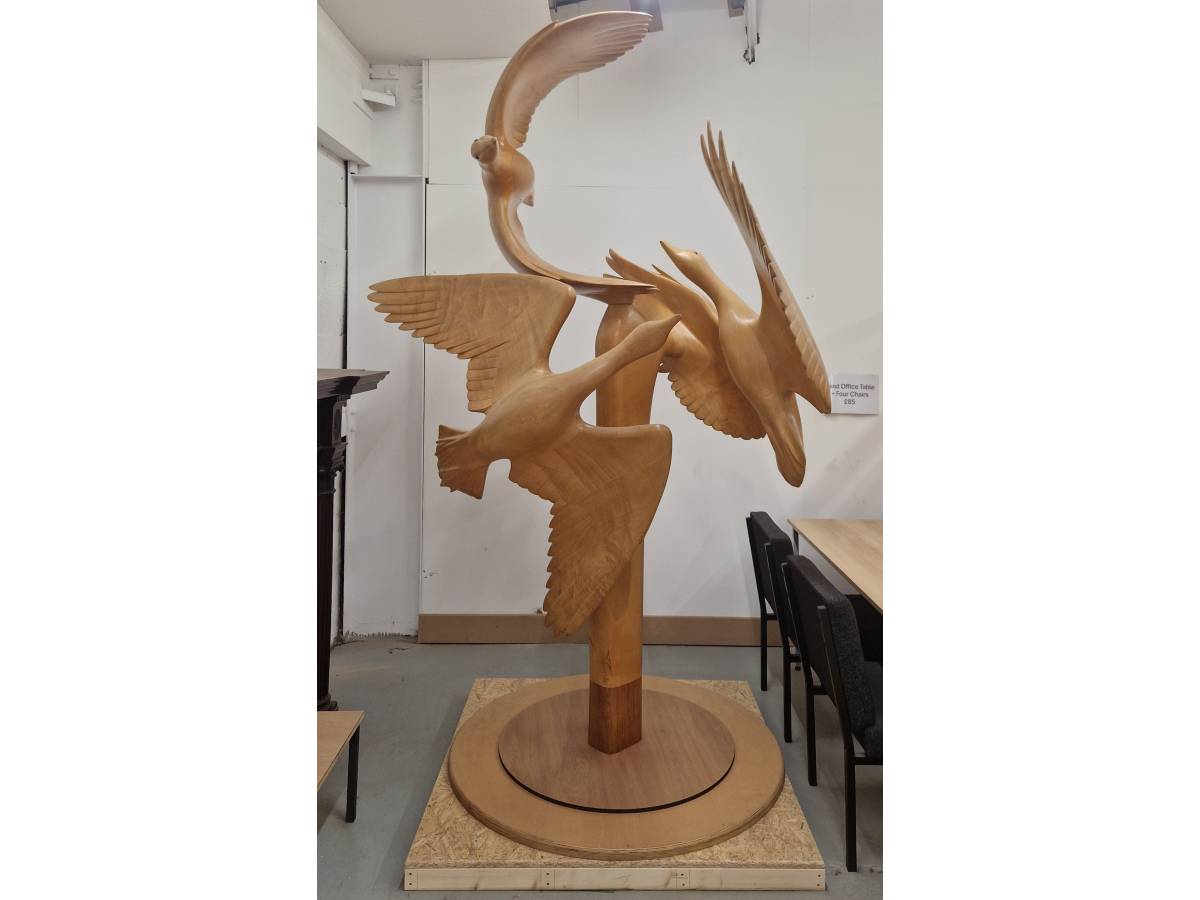
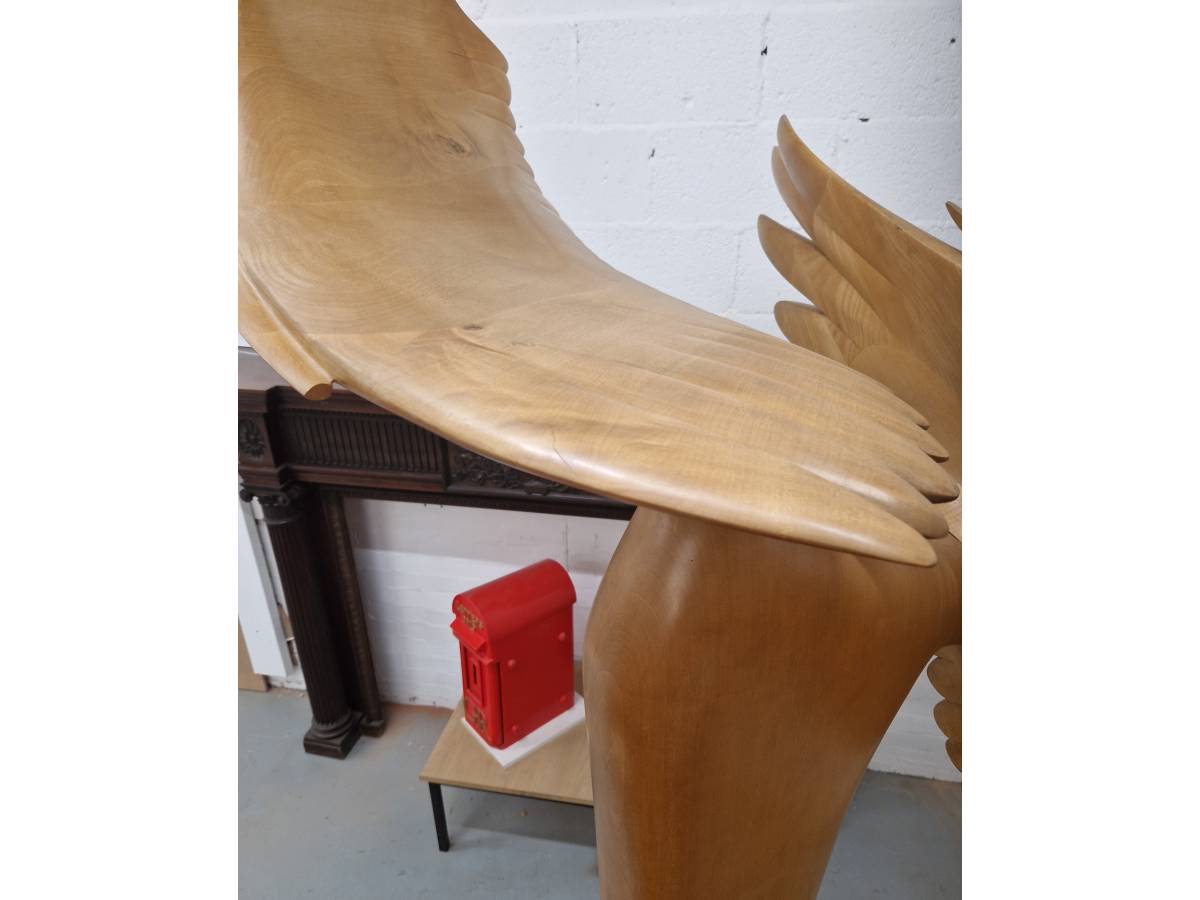
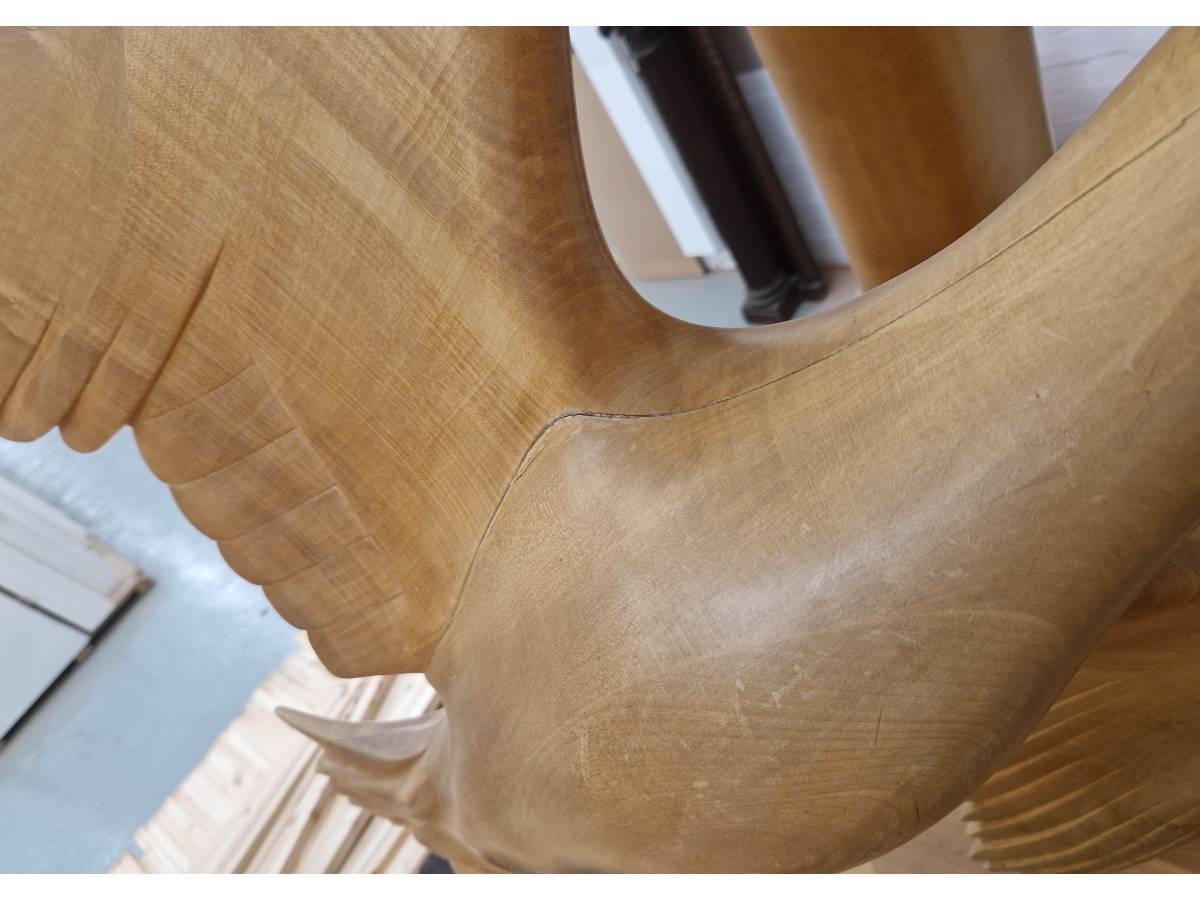
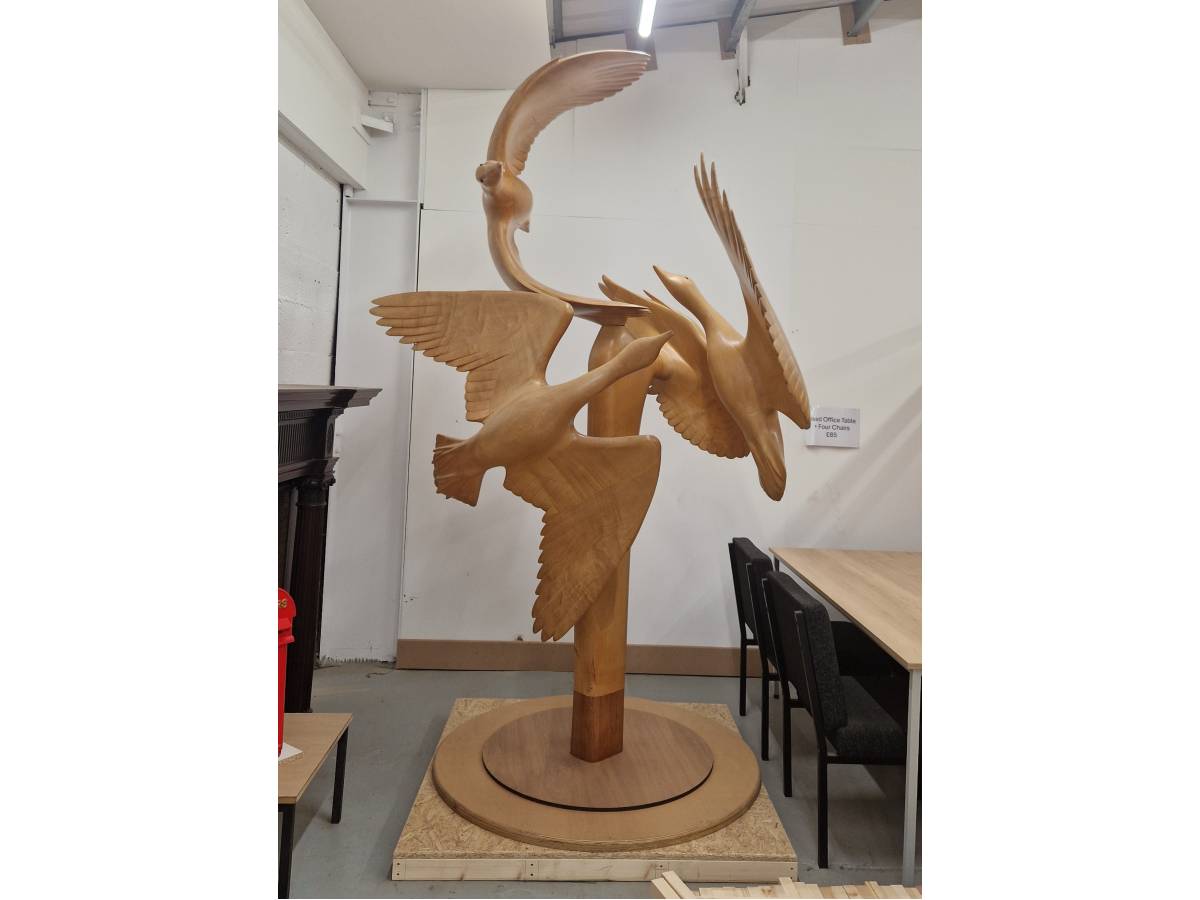
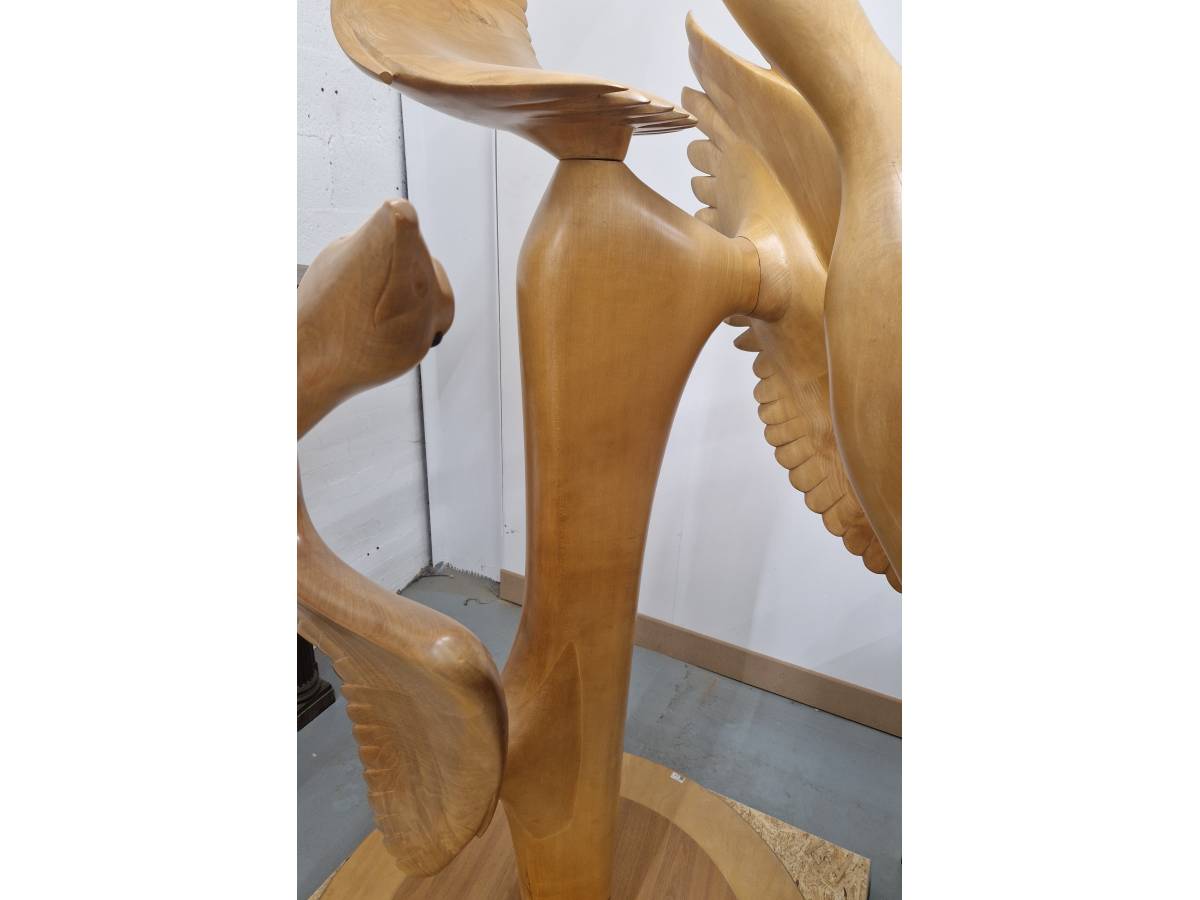
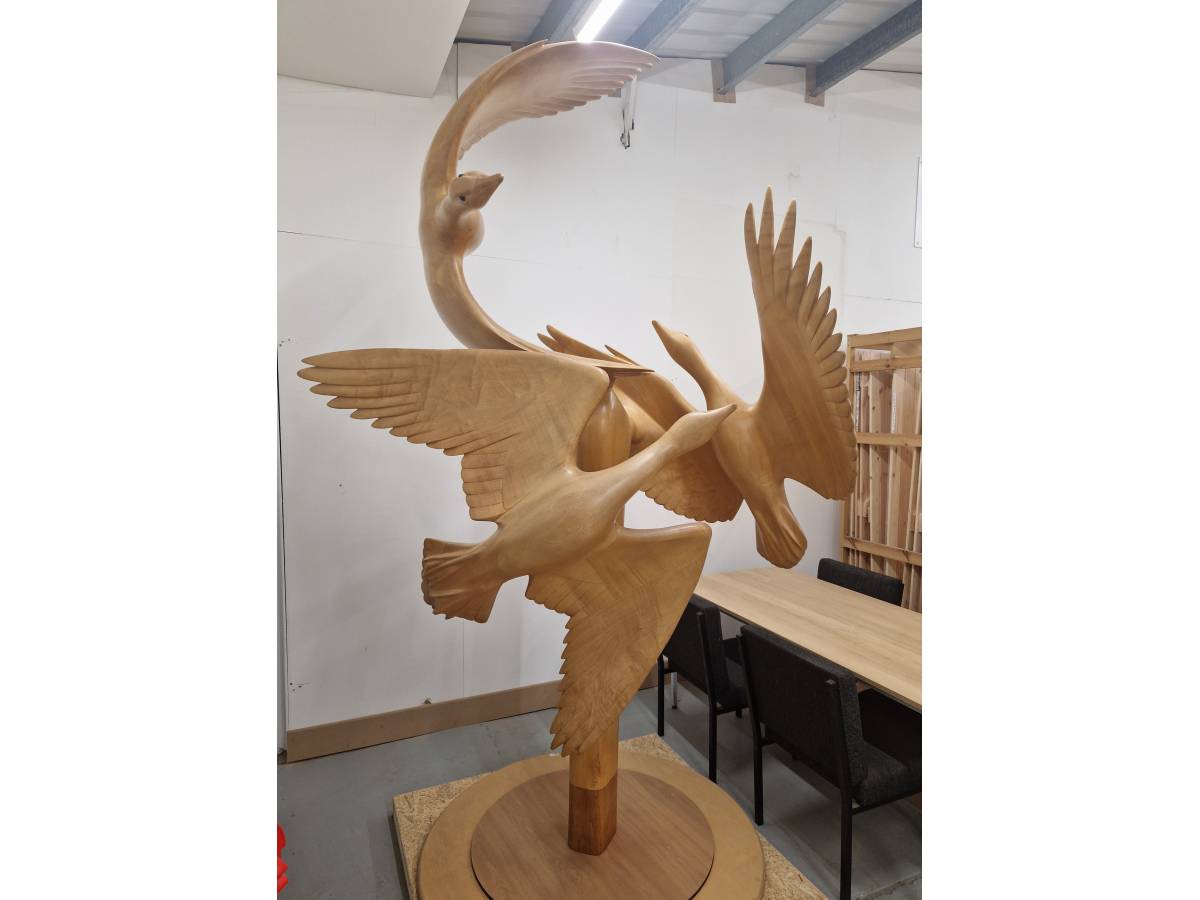
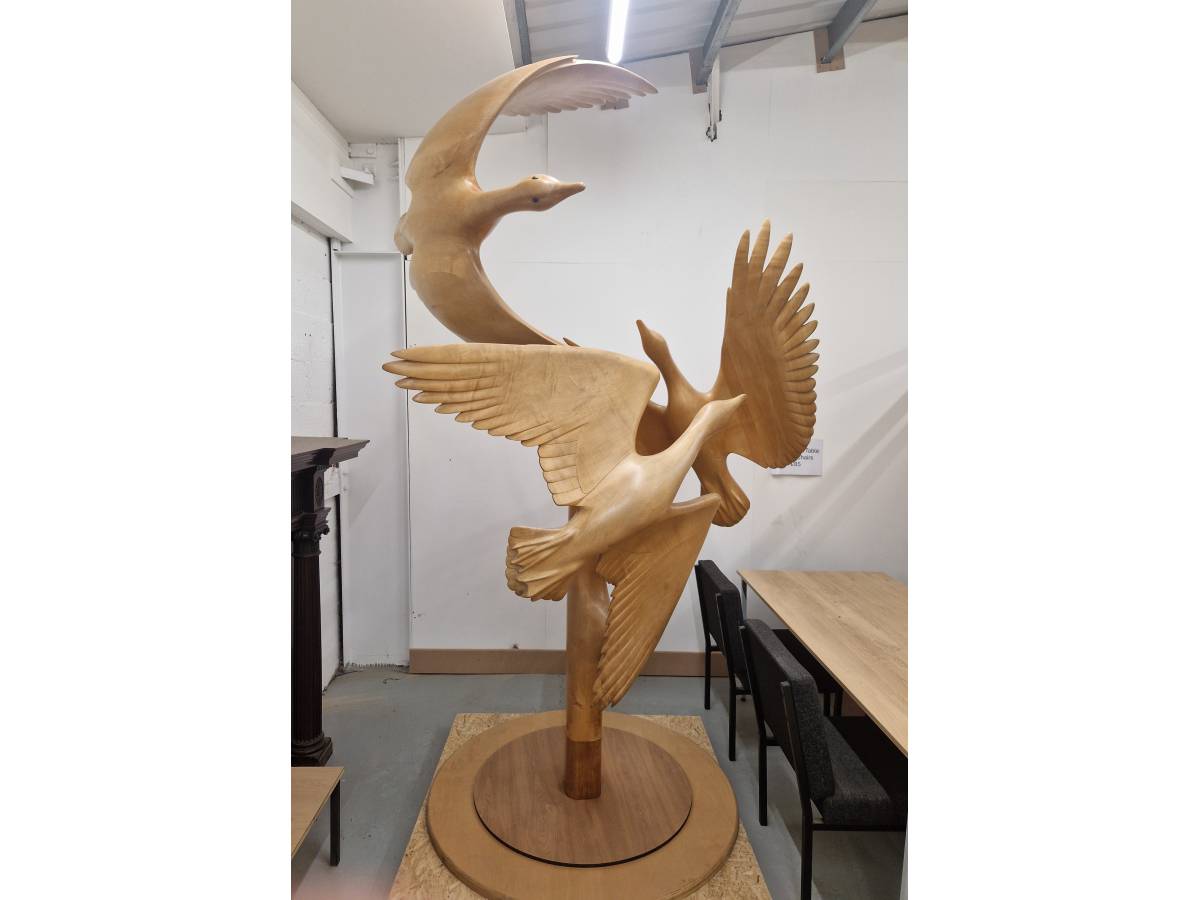
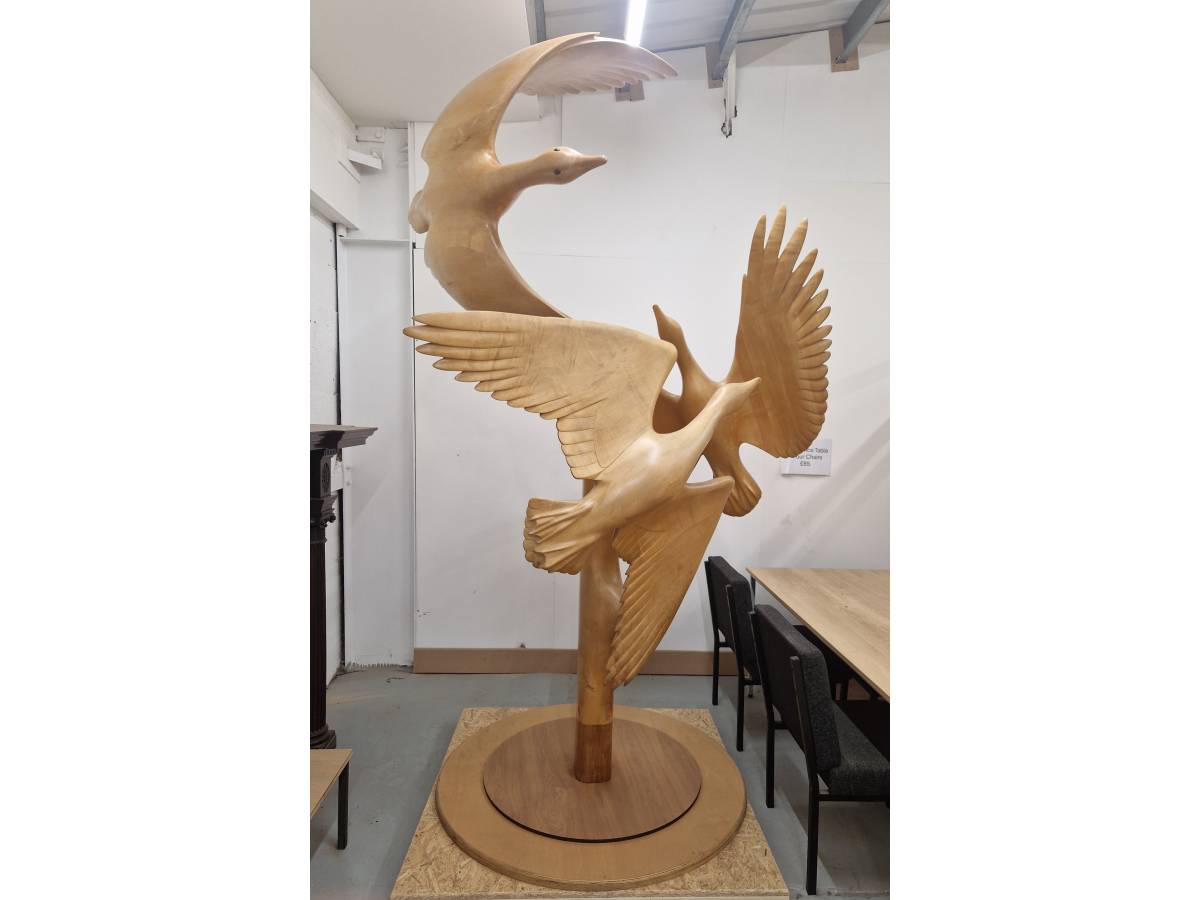
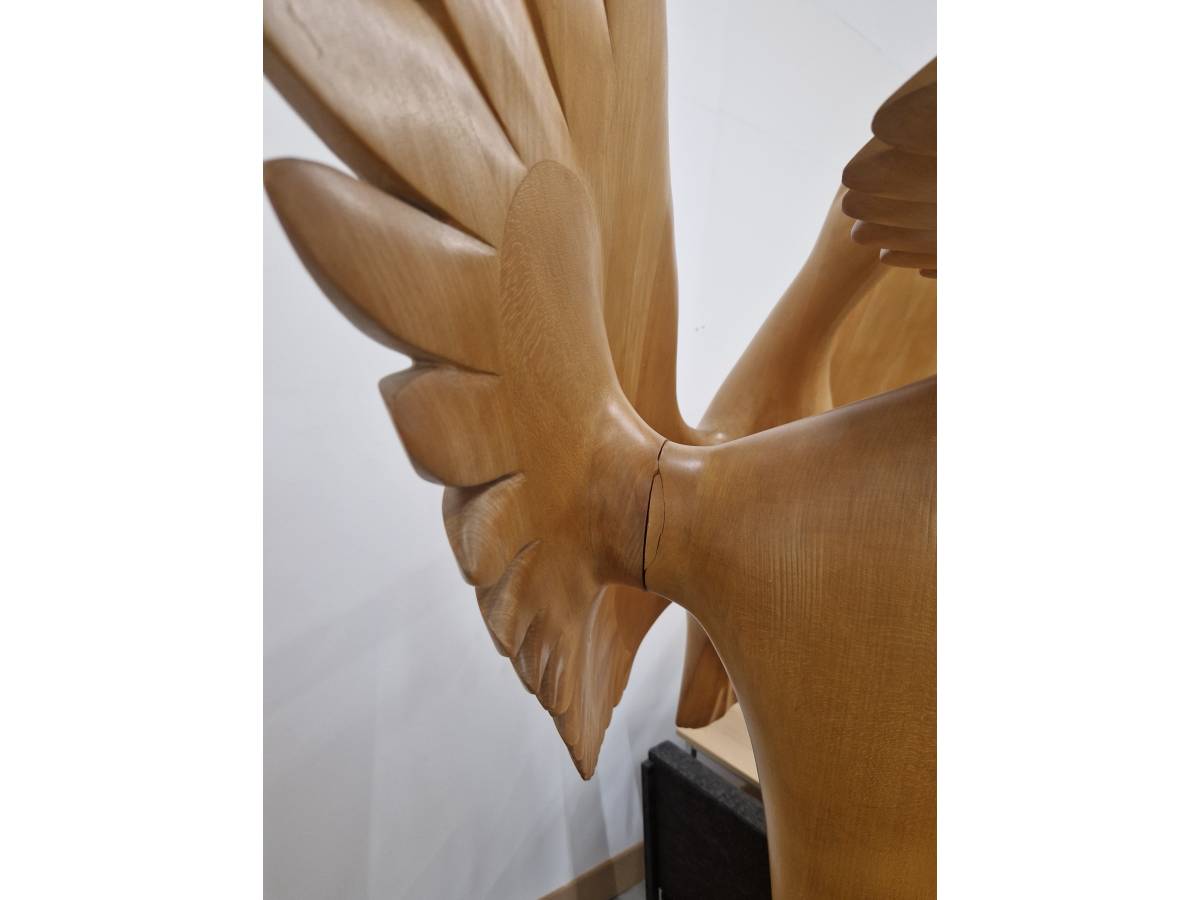
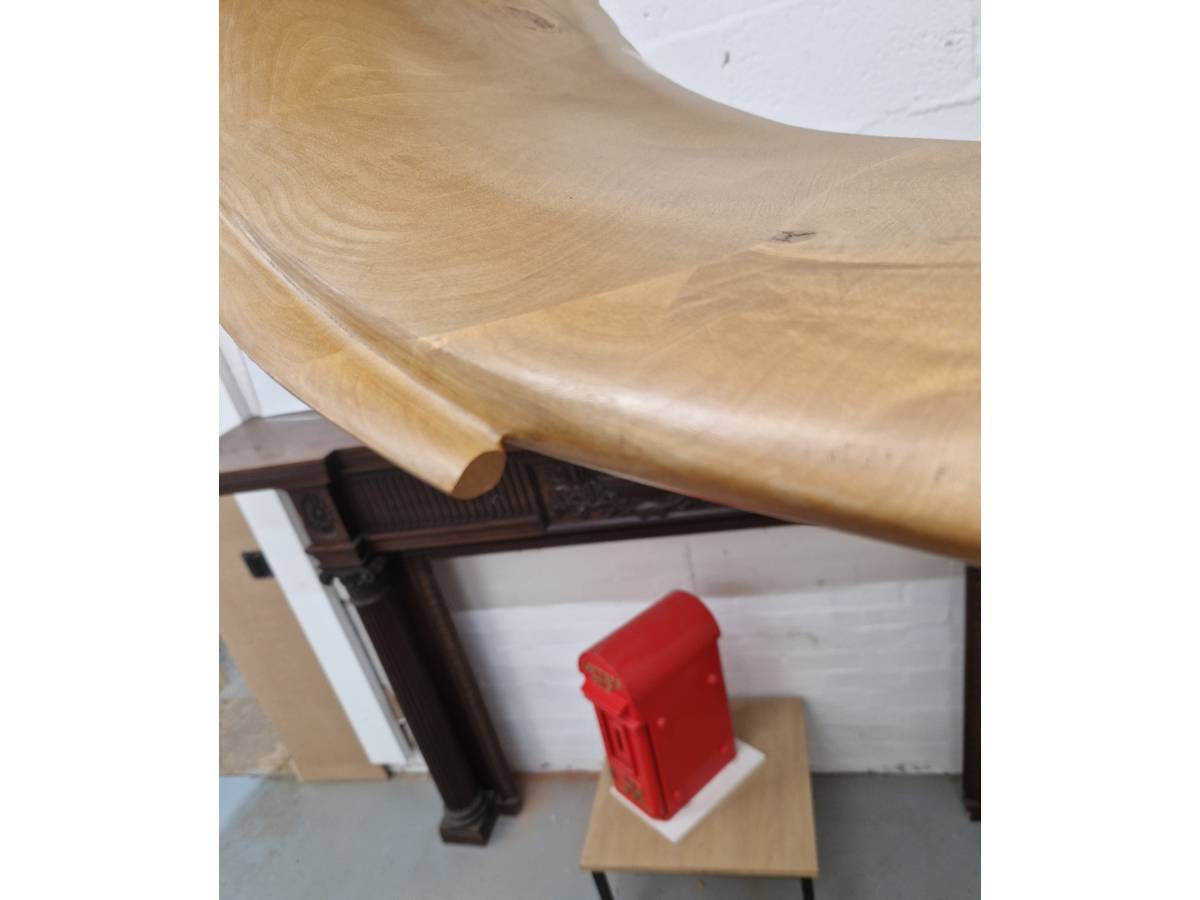
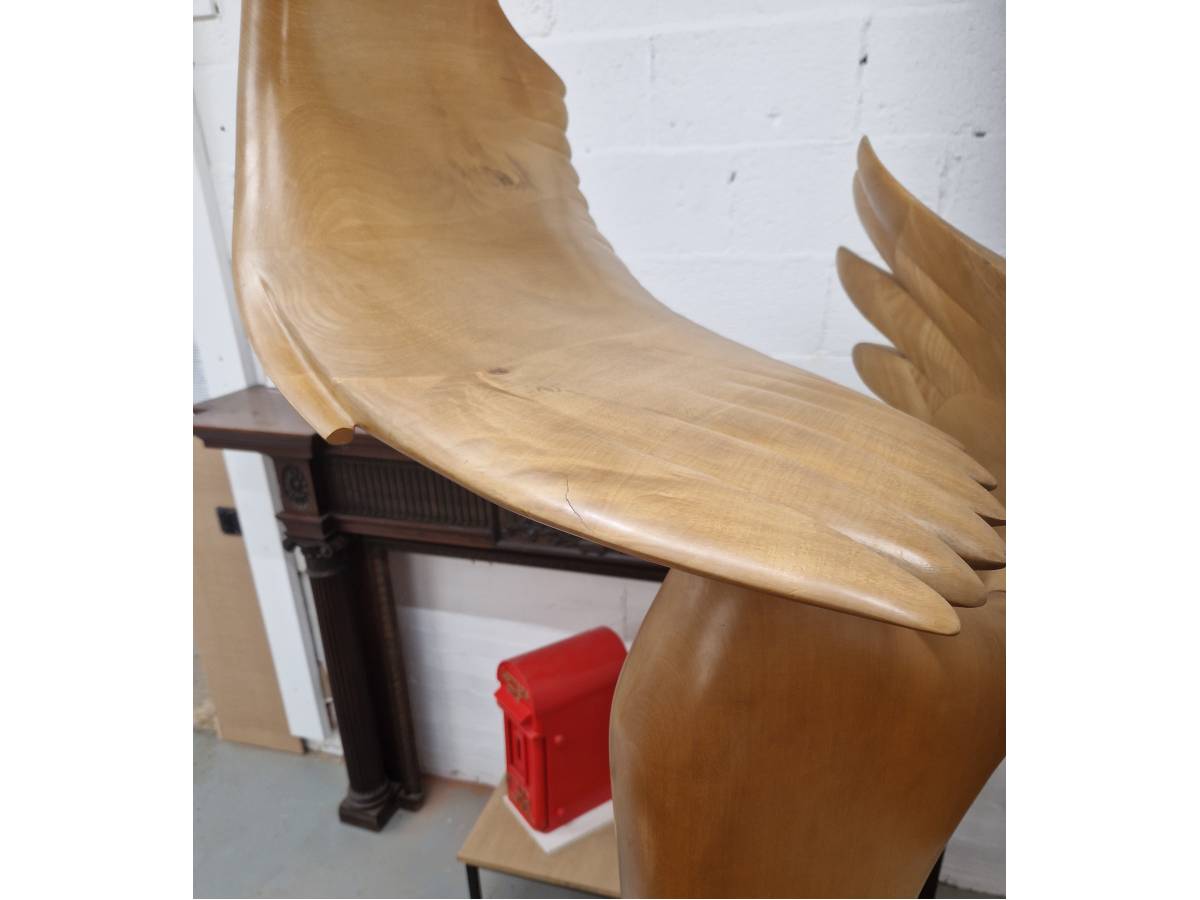
Walter Richie (British 1919-1997) “Flying Geese” (1981-83) Large, rare and impressive sculpture carved in sycamore, ebony and black walnut, designed and executed 1981-83, each bird separately affixed to the shaped central rotating column mounted on a two-part circular base, 274cm high, 162cm wide, the base 120cm diameter. Commissioned by the National Westminster Bank upon specialist advice and designed specifically for a new branch in Worcester where it was displayed before being removed many years later, subsequently acquired April 2012 and renovated that year – the design was inspired by the former name of St. Swithen Street along which the bank partly ran, Goose Lane, this sculpture is listed and illustrated pp. 39-40 of Walter Ritchie Sculpture, pub. Walter Ritchie, Warwick 1994 (ISBN 0 9506205 5 6). Walter Ritchie displayed innate skill from an early age and had become a fully-fledged sculptor by the age of 18, going on to study under Eric Gill as one of his last ever pupils after World War Two. He displayed his skills across many different natural materials over a career which he pursued with a singularly uncompromising artistic vision that characterised his legacy. Ritchie is best known for his depiction of cricketing legend Len Hutton at The Oval, relief carved into brick with a remarkable dynamism and fluidity that Ritchie particularly excelled in, very much mirrored here in “Flying Geese” which equally demonstrates a sense of movement beyond the material, itself expertly handled and sculpted with the utmost attention to detail whilst not losing sight of its overall physical presence in space and undeniable grace. This sculpture presents a very rare opportunity to own the work of an artist who operated in complete contrast to other, more commercially successful sculptors of the era, for example never employing assistants, and shunning both the London scene and wider society to the extent that he only ever had two exhibitions in his lifetime. As such, Ritchie could not be described as a household name and yet, when one considers that his works feature in or on the walls of hospitals, schools, churches, banks, and even cricket grounds, his time will surely come, whether he would like it or not.